
Pregnancy can bring plenty of surprises.
And your skin may be one of them.
Some women experience that famous pregnancy glow. Others suddenly find themselves dealing with breakouts, dryness, sensitivity, or dark patches that weren’t there before.
Sometimes, it’s a little of everything.
If your usual skincare routine suddenly feels unfamiliar, you’re probably wondering:
Can I still get facials while pregnant? And which treatments should I avoid?
The good news is that many gentle facial treatments can still be part of your skincare routine during pregnancy.
The key is choosing appropriate ingredients, avoiding unnecessary risks, and making sure your esthetician knows you’re expecting.
At Glow Up Studio in Dallas, we customize our facials around your skin, your concerns, and your comfort.
And when you’re pregnant, that customization becomes especially important.
Important: Always follow your obstetrician’s or healthcare provider’s guidance regarding skincare ingredients and professional treatments during pregnancy. This article provides general education, not individual medical clearance.
Can You Get a Facial While Pregnant?
Yes, many women can continue enjoying facials during pregnancy.
However, not every facial treatment or ingredient is appropriate.
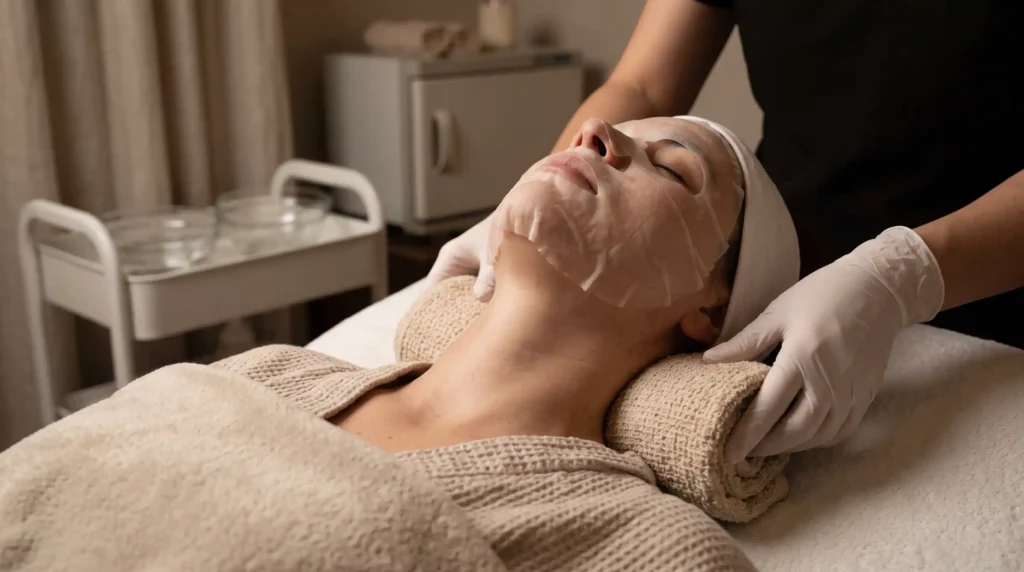
Gentle services focused on cleansing, hydration, and skin-barrier support are often reasonable options.
More intensive resurfacing treatments and procedures with limited pregnancy safety data are generally postponed.
The safest approach is to tell your esthetician you’re pregnant before booking so the treatment can be reviewed and adjusted appropriately.
And if you’re unsure about a particular ingredient or service, ask your medical provider first.
Which Facials Are Generally Considered Pregnancy-Friendly?
During pregnancy, simpler is often better.
Rather than focusing on aggressive correction, your facial can emphasize maintaining healthy-looking, comfortable skin.
Gentle Hydrating Facials
Pregnancy can leave your skin feeling unusually dry, tight, or dehydrated.
A customized hydrating facial may help improve comfort and support the skin barrier without aggressive resurfacing.
At Glow Up Studio, we can focus on gentle cleansing, hydration, and products selected for your skin.
Calming and Soothing Facials
If your skin suddenly feels more reactive, a calming facial may be a better choice than a corrective treatment.
These facials focus on comfort, hydration, and minimizing unnecessary irritation.
Gentle Exfoliation
Some forms of light exfoliation may be appropriate during pregnancy.
However, the type of exfoliant, its concentration, and the condition of your skin matter.
Your esthetician should review the products being used and follow any recommendations from your healthcare provider.
Gentle Extractions
Hormonal changes can increase congestion and breakouts.
When appropriate, careful professional extractions may help address certain clogged pores.
Aggressive extraction of inflamed or painful lesions should be avoided.
Relaxing Facial Massage
Gentle facial massage may be a welcome part of your appointment.
However, pregnancy can affect comfort, temperature sensitivity, and positioning.
Let your esthetician know if you feel nauseated, overheated, lightheaded, or uncomfortable.
Which Facial Treatments Should You Avoid During Pregnancy?
Some treatments are generally postponed during pregnancy because of potential risks or insufficient safety research.
Microneedling and Microchanneling
Professional collagen-induction treatments, including microneedling and microchanneling, are generally postponed during pregnancy.
At Glow Up Studio, this includes ProCell Microchanneling.
These treatments can be revisited after pregnancy, with appropriate medical guidance.
Strong Chemical Peels
Deep or aggressive chemical peels are generally avoided during pregnancy.
Certain peeling agents and combinations may also be inappropriate.
While some superficial peels may be considered in selected circumstances, we recommend discussing professional chemical exfoliation with your healthcare provider before treatment.
Laser and Energy-Based Treatments
Elective cosmetic laser, radiofrequency, and similar energy-based procedures are generally deferred during pregnancy because safety data may be limited.
Electrical Facial Treatments
Some facial devices use electrical stimulation or microcurrent.
Because pregnancy safety information for these treatments is limited, they’re commonly avoided as a precaution.
Injectable Cosmetic Treatments
Elective cosmetic injectables, including neuromodulators and dermal fillers, are generally postponed during pregnancy.
These are medical procedures and should be discussed with a qualified healthcare provider.
Which Skincare Ingredients Should You Avoid During Pregnancy?
Pregnancy skincare advice can be confusing because not all ingredients carry the same level of concern.
Some should be avoided.
Others may be appropriate in certain formulations or concentrations.
Here’s how to think about the most common ingredients.
Retinoids: Avoid During Pregnancy
Retinoids are commonly used for acne, fine lines, and skin renewal.
Examples include:
- Retinol
- Tretinoin
- Adapalene
- Tazarotene
- Isotretinoin
Oral isotretinoin is known to cause serious birth defects and must not be used during pregnancy.
Topical retinoids are also generally avoided during pregnancy as a precaution.
If you’re using a prescription retinoid and become pregnant, contact your prescribing healthcare provider.
Hydroquinone: Generally Avoid
Hydroquinone is a skin-lightening ingredient used for hyperpigmentation.
Because a relatively substantial amount can be absorbed through the skin and pregnancy safety data are limited, it is generally avoided during pregnancy.
Salicylic Acid: Formulation Matters
Salicylic acid is commonly found in acne products and chemical peels.
Low-concentration topical products may be considered acceptable in limited use by some medical providers, but stronger peels and extensive application raise different considerations.
Don’t assume that a professional salicylic acid peel is equivalent to a small amount in an over-the-counter cleanser.
Discuss your specific products and treatments with your healthcare provider.
Benzoyl Peroxide: Ask Your Provider
Benzoyl peroxide is commonly used for acne.
Some medical guidance considers limited topical use acceptable during pregnancy because systemic absorption is low.
However, your healthcare provider should advise you based on your circumstances.
Glycolic and Lactic Acids: Use Appropriate Caution
These ingredients are commonly used for exfoliation.
Some lower-strength topical formulations may be considered appropriate during pregnancy.
Professional peels are different because concentrations and exposure can be substantially higher.
Your esthetician and medical provider should review the treatment before proceeding.
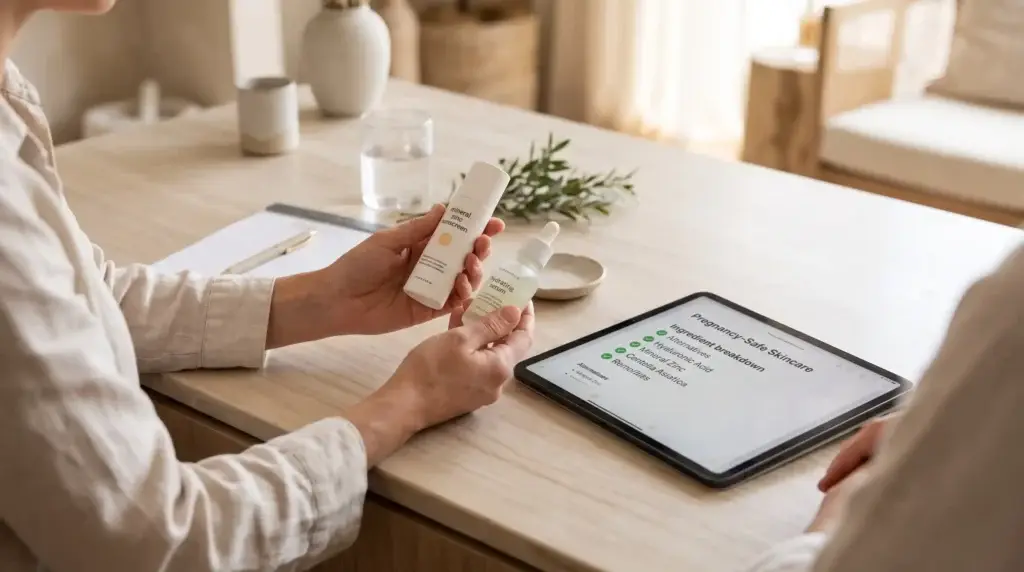
Sunscreen: Don’t Skip It
Daily sun protection remains important during pregnancy.
Mineral sunscreens containing zinc oxide or titanium dioxide are often recommended for people who prefer to minimize uncertainty about chemical sunscreen filters.
However, that doesn’t mean every chemical sunscreen is proven unsafe during pregnancy.
The important thing is using effective broad-spectrum sun protection consistently.
What About HydroLux During Pregnancy?
HydroLux is Glow Up Studio’s hydrodermabrasion facial, designed to cleanse, exfoliate, and hydrate the skin.
But HydroLux should not automatically be described as pregnancy-safe.
Its suitability depends on the specific treatment steps, exfoliating solutions, serums, and your individual skin condition.
During pregnancy, a simpler customized facial focused on hydration and calming may be more appropriate.
Our estheticians can review your treatment options and any medical guidance you’ve received before recommending a service.
If you’re expecting, please tell us before booking.
How to Treat Pregnancy Acne
Pregnancy hormones can contribute to breakouts, even if you rarely experienced acne before.
You may notice congestion or blemishes around your chin, jawline, or cheeks.
The challenge is that some familiar acne treatments, particularly retinoids, are no longer appropriate.
A pregnancy-conscious skincare plan may include:
- Gentle cleansing
- Non-comedogenic moisturizer
- Consistent sunscreen
- Avoiding excessive exfoliation
- Professional extractions when appropriate
- Acne treatments approved by your healthcare provider
If you’re experiencing painful, cystic, or persistent acne, consult a dermatologist or medical provider.
Professional facials can complement medical care, but they don’t replace it.
What About Melasma and Pregnancy Dark Spots?
Melasma is a form of hyperpigmentation that can develop or become more noticeable during pregnancy.
It often appears as brown or gray-brown patches on the cheeks, forehead, or upper lip.
Because pregnancy can increase susceptibility to pigmentation changes, aggressive resurfacing may not be the best approach.
The foundation of care generally includes:
Daily sun protection.
A broad-spectrum mineral sunscreen, a wide-brimmed hat, and avoiding unnecessary sun exposure can help protect your skin.
Tinted sunscreens containing iron oxides may provide additional protection against visible light, which can contribute to melasma.
Your healthcare provider can recommend appropriate treatment options.
And while pregnancy-related pigmentation may improve after delivery, it doesn’t always disappear completely.
How to Care for Dry or Sensitive Skin During Pregnancy
If your skin suddenly feels dry, tight, or reactive, resist the urge to add more products.
Instead, simplify.
Choose a gentle cleanser, a moisturizer suited to your skin, and daily SPF.
Avoid introducing multiple active ingredients at once.
A customized hydrating facial may also help improve comfort.
At Glow Up Studio, we focus on supporting your skin rather than pushing it through aggressive treatments when it’s already feeling sensitive.
Can You Get Lash Lifts or Brow Lamination While Pregnant?
This is another question we hear from expecting clients.
Lash lifts, brow lamination, and tinting involve cosmetic chemical solutions.
Pregnancy-specific safety research on these services is limited.
Some clients also experience changes in hair texture or sensitivity during pregnancy, which can make treatment responses less predictable.
At Glow Up Studio, we offer K-Lux Korean Lash Lifts, Signature Brow Lamination, and K-Lux Korean Brow Lamination.
If you’re pregnant, tell your stylist before scheduling.
We recommend discussing these services with your healthcare provider so you can make an informed decision.
And if you’d prefer to postpone chemical lash or brow treatments, our team can help you consider other grooming options.
What About Your Comfort During a Pregnancy Facial?
Pregnancy-safe skincare isn’t just about ingredients.
It’s also about your comfort during the appointment.
Depending on how far along you are, lying flat for an extended period may become uncomfortable.
You may also experience greater sensitivity to heat, fragrances, or pressure.
Let your esthetician know if you need:
- Extra pillows or support
- A more comfortable position
- A break during treatment
- Less fragrance
- A cooler room
- Adjustments to facial massage
We want your appointment to feel relaxing, not uncomfortable.
What Should You Tell Your Esthetician Before Booking?
Before your appointment, let us know:
- Whether you’re pregnant, trying to conceive, or nursing
- How far along you are
- Any recommendations from your healthcare provider
- Your current skincare products
- Prescription medications or treatments
- Any new sensitivity or skin concerns
- Whether certain positions or fragrances make you uncomfortable
That information helps us determine which treatments may be appropriate and whether medical clearance is needed.
Can You Get a Facial During the First Trimester?
Many gentle facials may be appropriate during the first trimester, but your individual pregnancy and medical guidance matter.
Some clients feel comfortable continuing their regular skincare routine.
Others experience nausea, fatigue, or heightened sensitivity that makes a facial less appealing.
There’s no universal rule that everyone must wait until the second trimester for a gentle facial.
However, if your pregnancy is high-risk or you have concerns, ask your medical provider before booking.
Can You Resume Your Regular Facials After Pregnancy?
Many treatments postponed during pregnancy can be reconsidered after delivery.
However, breastfeeding introduces a separate set of considerations.
Some ingredients and procedures may still require medical guidance while nursing.
Let your esthetician know if you’re breastfeeding so your treatment plan can be reviewed appropriately.
Pregnancy-Safe Facials in Dallas: Let Glow Up Studio Customize Your Glow
Pregnancy changes plenty of things.
Your skincare routine may be one of them.
But that doesn’t mean you have to give up the pleasure of a professional facial.
It simply means choosing treatments that make sense for your skin and your pregnancy.
At Glow Up Studio in Dallas, we offer customized facials focused on your individual needs, including gentle cleansing, hydration, and calming care.
We’ll review your skincare concerns, discuss appropriate treatment options, and encourage you to follow your healthcare provider’s guidance.
And when you’re ready to return to more advanced treatments after pregnancy, we can help you plan that transition.
Visit Glow Up Studio in Inwood Village at 5525 W Lovers Lane, Dallas, Texas.
Book your facial at Glow Up Studio, let us know you’re expecting, and we’ll help you choose an appropriate treatment for your skin.
Related reading: Glow Up Studio Custom Facial 101: Everything you need to know
Frequently Asked Questions
Can I get a facial while pregnant?
Many people can continue receiving gentle, customized facials during pregnancy. Treatment selection should account for ingredients, skin sensitivity, pregnancy-related concerns, and medical guidance.
What facial treatments should I avoid during pregnancy?
Professional microneedling, microchanneling, aggressive chemical peels, elective cosmetic lasers, electrical facial treatments, and injectables are commonly postponed during pregnancy.
Are chemical peels safe during pregnancy?
Some superficial treatments may be considered in selected circumstances, but stronger peels are generally avoided. Discuss professional chemical peels with your healthcare provider before treatment.
Is HydroLux safe during pregnancy?
HydroLux should not automatically be considered pregnancy-safe. Its suitability depends on the specific steps, solutions, and individual circumstances. A simpler customized hydrating facial may be more appropriate.
Can I get a facial during my first trimester?
Some gentle facials may be appropriate during the first trimester. Consult your healthcare provider if you have pregnancy complications or concerns about specific treatments.
Can I use retinol while pregnant?
Topical retinoids, including retinol and prescription tretinoin, are generally avoided during pregnancy. Ask your healthcare provider about appropriate alternatives.
Is salicylic acid safe during pregnancy?
Safety considerations depend on concentration, formulation, and extent of use. Some low-concentration topical products may be acceptable with medical guidance, while stronger professional peels are generally avoided.
Can I get a Korean Lash Lift while pregnant?
Pregnancy-specific safety research on lash lifts is limited. Discuss the service with your healthcare provider and tell your Glow Up Studio stylist you’re pregnant before scheduling.
What facial is best for pregnancy acne?
A gentle, customized facial may help with cleansing, hydration, and appropriate extractions. For persistent or painful acne, consult your medical provider about pregnancy-compatible treatment options.
Can I get facials while breastfeeding?
Many facials may be compatible with breastfeeding, but individual ingredients and treatments should be reviewed. Tell your esthetician you’re nursing and consult your healthcare provider about any uncertainties.