
If your skin feels dull, congested, uneven or simply ready for a refresh, you may find yourself comparing two classic professional exfoliation treatments: chemical peel vs microdermabrasion.
So which one is better?
Neither — at least not for everyone.
Chemical peels and microdermabrasion exfoliate the skin in very different ways, and the right choice depends on your skin, your goals, the amount of downtime you’re comfortable with and what you’re already using at home.
At Glow Up Studio in Dallas, we don’t believe in choosing a treatment because it’s trending. We look at your skin first and then recommend the treatment that makes the most sense for what you’re trying to achieve.
Here’s how chemical peels and microdermabrasion compare.
Chemical Peel vs Microdermabrasion: The Quick Answer
A chemical peel uses carefully selected exfoliating ingredients to loosen and remove damaged surface cells. Professional peels can vary significantly in formulation and intensity, which allows an esthetician to customize treatment around concerns such as uneven tone, congestion, dullness and signs of aging.
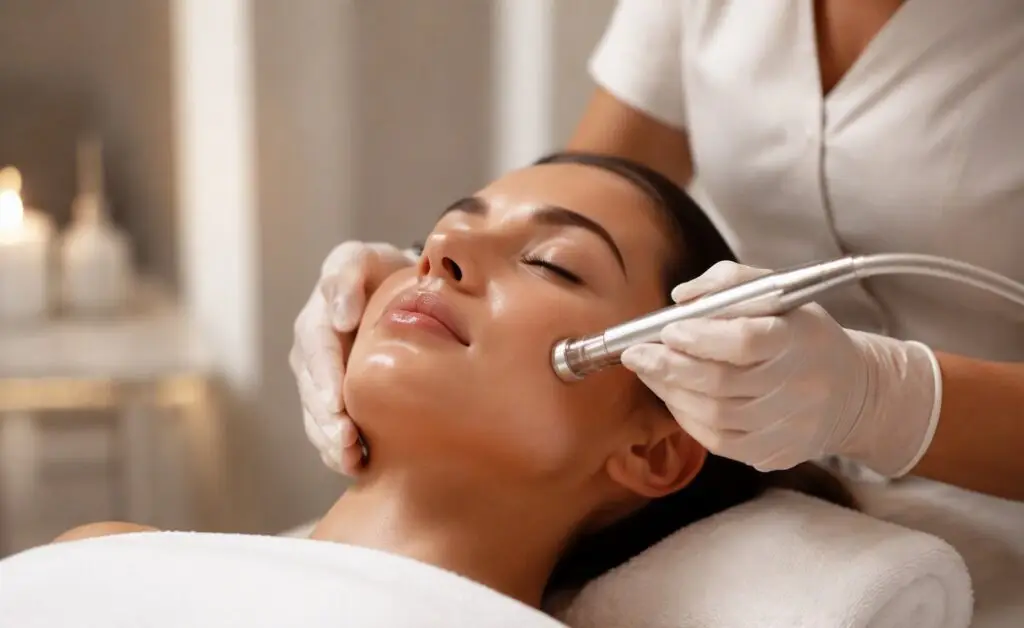
Microdermabrasion mechanically exfoliates the outer surface of the skin using a diamond-tip handpiece and gentle suction. It is primarily a polishing treatment that can leave skin looking smoother, brighter and refreshed.
A simple way to think about the difference is:
Chemical peel = targeted correction + resurfacing
Microdermabrasion = physical exfoliation + polish
But your skin is more nuanced than a formula, which is why a professional assessment matters.
How Does a Chemical Peel Work?
Professional chemical peels use exfoliating acids or other resurfacing ingredients selected according to the client’s skin, treatment goals and tolerance.
Depending on the formulation, a peel may be used to improve the appearance of concerns including:
Uneven skin tone, post-breakout discoloration, congestion, dullness, rough texture and visible signs of aging.
Not every chemical peel causes dramatic peeling.
Some professional formulas are designed to provide relatively gentle exfoliation, while stronger corrective treatments can involve more visible dryness or flaking afterward.
At Glow Up Studio, our estheticians select treatments based on your actual skin rather than assuming that stronger automatically means better.
Professional skincare should be strategic.
How Does Microdermabrasion Work?
Microdermabrasion takes a physical approach to exfoliation.
A diamond-tip handpiece gently passes across the surface of the skin while suction removes loosened dead skin cells and surface debris.
Because microdermabrasion focuses primarily on the outermost surface of the skin, it is especially appealing when the goal is to improve the look and feel of dull or rough skin without choosing a chemical exfoliation treatment.
Clients often love microdermabrasion because skin can feel noticeably smoother immediately afterward.
At Glow Up Studio, our Diamond Bright Microderm Facial combines professional exfoliation with the rest of the facial experience rather than treating exfoliation as the entire appointment.
Chemical Peel vs Microdermabrasion by Skin Concern
| Skin goal | Treatment we may consider | Why |
| Dull, tired-looking skin | Microdermabrasion or peel | Both exfoliate, but microdermabrasion offers an especially effective physical polish |
| Rough surface texture | Microdermabrasion | Helps remove accumulated surface cells and smooth the feel of the skin |
| Uneven-looking pigmentation | Chemical peel | Certain peel formulations can be selected specifically for discoloration and uneven tone |
| Post-breakout marks | Chemical peel | Targeted exfoliation may help improve the appearance of discoloration over time |
| Congestion | Chemical peel or another customized facial | The right choice depends on the type of congestion and whether active inflammation is present |
| Active, inflamed breakouts | Individual assessment first | Mechanical exfoliation may not be appropriate over inflamed or compromised skin |
| Fine lines and visible aging | Chemical peel | Certain professional peels are designed to support smoother, more refreshed-looking skin |
| Sensitive or reactive skin | Individual assessment first | Neither treatment should automatically be assumed to be the gentler choice |
| Quick surface refresh | Microdermabrasion | A strong option when the primary goal is smoother, brighter-looking skin |
The important distinction is that skin concern matters more than treatment popularity.
Is a Chemical Peel Better for Dark Spots?
If discoloration is your primary concern, a professional chemical peel may be more useful than microdermabrasion because peel formulations can be selected specifically for uneven tone and surface pigmentation.
But pigmentation is complicated.
Sun exposure, hormones, inflammation, acne history and the type and depth of discoloration all affect what will respond to treatment.
That’s why we don’t recommend choosing a peel simply because you see a dark spot.
Your Glow Up Studio esthetician can evaluate the appearance of the pigmentation and recommend an appropriate professional treatment and homecare routine.
And SPF matters.
Whatever professional treatment you choose, consistent sun protection is an important part of protecting your results.
Is Chemical Peel or Microdermabrasion Better for Acne?
This depends heavily on the type of acne.
For congestion, clogged pores and post-breakout discoloration, certain professional peel formulations may be incorporated into a corrective skincare plan.
Microdermabrasion can be useful for texture and surface buildup, but it may not be appropriate over active, inflamed or highly irritated breakouts.
If acne is persistent, severe, painful or appears hormonal, professional esthetic treatment may also need to be paired with care from a dermatologist or other medical provider.
At Glow Up Studio, the goal isn’t to force every breakout into the same facial.
It’s to determine what your skin actually needs.
Which Is Better for Dull Skin?
This is where microdermabrasion really shines.
If your primary complaint is simply:
“My skin looks tired.”
“My makeup isn’t sitting as smoothly.”
“My skin feels rough.”
“I just need a really good refresh.”
Microdermabrasion can provide an effective surface polish without requiring you to pursue a more corrective treatment plan.
A chemical peel can also help brighten dull-looking skin, particularly when other concerns such as uneven tone or congestion are present.
This is why two clients who both say they want “glowing skin” may leave Glow Up Studio with completely different treatment recommendations.
Chemical Peel vs Microdermabrasion: What About Downtime?
Downtime varies more than many online comparisons suggest.
Microdermabrasion generally requires little recovery for most appropriate candidates, although temporary pinkness or sensitivity can occur.
Chemical peel recovery depends significantly on the formulation and intensity of the treatment.
A gentle peel may produce minimal visible exfoliation, while a stronger resurfacing treatment may lead to temporary dryness, tightness or flaking.
Your esthetician should explain what to expect before performing the treatment.
If you have a wedding, photoshoot, vacation or important event approaching, tell us.
Timing is part of choosing the right facial.
Which Treatment Is More Comfortable?
Both treatments are generally well tolerated when appropriately selected and performed.
Microdermabrasion feels like physical exfoliation with gentle suction.
Chemical peels vary. You may experience warmth, tingling or other temporary sensations depending on the formulation being used.
Your esthetician should always know about unusual sensitivity, medications, recent procedures and the active ingredients you’re using at home before beginning either treatment.
Can You Combine Chemical Peels and Microdermabrasion?
They can both have a place within a professional skincare plan, but that does not mean more exfoliation is always better.
Skin-barrier health matters.
Depending on your skin and goals, your esthetician may recommend alternating different types of treatments over time rather than repeatedly stacking exfoliation.
You may also discover that you don’t need both.
Some clients benefit from corrective peels followed by maintenance facials. Others love regular microdermabrasion. Others respond beautifully to treatments such as HydroLux, which provides a different combination of cleansing, exfoliation, extractions when appropriate and hydration.
The best skincare routine isn’t the one with the most treatments.
It’s the one that makes sense for your skin.
What About HydroLux?
If you’re comparing chemical peels and microdermabrasion because you want exfoliation and glow, don’t overlook HydroLux.
HydroLux is one of our most popular Glow Up Studio facials because it combines multiple steps into one treatment, including cleansing, exfoliation, hydration and extractions when appropriate.
That makes it a particularly good option for clients who want refreshed, deeply cleansed and hydrated-looking skin but aren’t necessarily looking for a traditional chemical peel.
Sometimes the answer to “chemical peel or microdermabrasion?” is actually:
Neither. There’s a better option for what your skin needs today.
That’s exactly why we customize.
Chemical Peel vs Microdermabrasion Before an Event
Have an important event coming up?
Tell your esthetician the date.
For a wedding, engagement photos, vacation or other major event, we generally prefer to establish which treatments your skin responds to well before the final countdown.
Microdermabrasion is often chosen when someone wants a surface refresh with relatively little disruption to their schedule.
A chemical peel may be appropriate earlier in an event-prep plan when we’re trying to address a specific corrective goal.
Treatment timing should always be based on the individual client, the intensity of the service and previous treatment history.
The week before your wedding isn’t the time to discover how your skin responds to a brand-new resurfacing treatment.
Which Treatment Should You Book First?
If you’re simply looking for smoother, brighter-looking skin and aren’t trying to address a significant corrective concern, microdermabrasion may be a great place to start.
If pigmentation, congestion or another targeted concern is driving your appointment, a professional peel may be the better direction.
If you aren’t sure, you don’t need to decide before you arrive.
Book the facial. Let us look at your skin.
That’s what we’re here for.
At Glow Up Studio, our estheticians consider your current skin condition, sensitivity, treatment history, homecare products and goals before recommending the right approach.
Chemical Peel vs Microdermabrasion in Dallas: Let Us Help You Choose
Google can tell you the difference between treatments.
It can’t look at your skin.
At Glow Up Studio in Inwood Village, our approach is personalized because the same treatment isn’t right for every face.
Whether you need corrective skincare, a professional peel, microdermabrasion, HydroLux or simply a great customized facial, we’ll help you choose the treatment that makes sense for your skin today — and build from there.
Glow Up Studio is located at 5525 W Lovers Lane in Dallas, Texas.
Book your facial at Glow Up Studio and let us help you find your best path to healthy, glowing skin.
Chemical Peel vs Microdermabrasion FAQs
Is chemical peel or microdermabrasion better?
Neither treatment is universally better. Chemical peels are highly customizable and may be selected for concerns such as uneven tone, congestion or visible signs of aging. Microdermabrasion primarily provides physical surface exfoliation and can be excellent for dullness and rough texture.
Which is better for dark spots: chemical peel or microdermabrasion?
Certain chemical peel formulations may be better suited to uneven pigmentation than surface polishing alone. However, the type of discoloration matters, so a professional evaluation is the best first step.
Is microdermabrasion good for acne?
Microdermabrasion may be useful for some clients with congestion or residual texture, but it isn’t appropriate for every type of acne and may be avoided over active, inflamed or compromised skin. Your esthetician should assess your skin first.
Which is better before a wedding: chemical peel or microdermabrasion?
It depends on your timeline and treatment history. Microdermabrasion may be considered when someone wants a surface refresh, while corrective peels are generally planned as part of a longer-term skincare strategy. Avoid making an important event your first experience with an unfamiliar treatment.
Does a chemical peel always make your skin peel?
No. The amount of visible exfoliation varies depending on the peel formulation, treatment intensity and individual skin response. Some professional peels may cause little visible peeling at all.
Can sensitive skin get a chemical peel?
Possibly. Having sensitive skin doesn’t automatically qualify or disqualify you from a peel or microdermabrasion. Your esthetician should evaluate your skin barrier, sensitivities, current products and treatment history before recommending exfoliation.
Can I use retinol before a chemical peel or microdermabrasion?
Tell your esthetician about any retinoids, exfoliating acids, prescription skincare and other active products you use before treatment. How and when they should be paused depends on the product, strength, treatment and individual skin, so follow the specific pre-treatment instructions provided for your appointment.
How often should I get chemical peels or microdermabrasion?
There isn’t one schedule that’s right for everyone. Frequency depends on your skin, the treatment performed, its intensity, your goals and what other professional or at-home exfoliation you’re using. Your esthetician can recommend an appropriate treatment schedule.